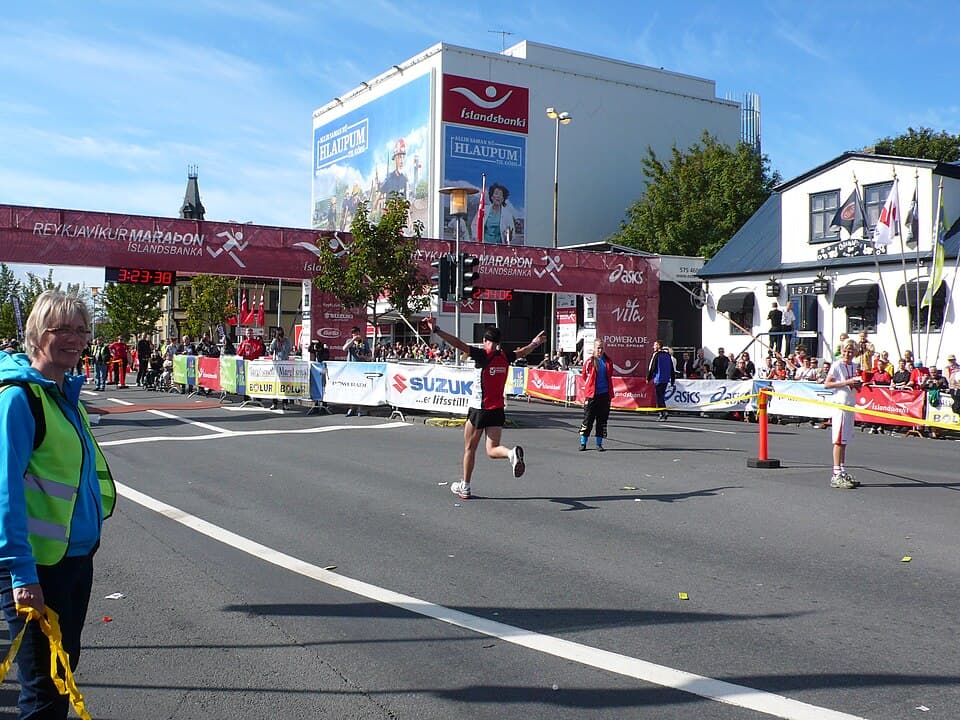
Reykjavik Marathon
Reykjavik, Iceland · Saturday 22 August 2026
Reykjavik in August offers a remarkable setting for distance running. The Icelandic capital sits on the edge of the North Atlantic, where long summer daylight extends well into the evening, giving runners ideal conditions for a late-August marathon. The city itself has a relaxed, outdoor-focused character, and the race draws participants from across the Nordic region and beyond. The event has deep local roots, with results dating back to 1984, making it a well-established fixture in the Icelandic running calendar. The course takes you through terrain that typifies Iceland's landscape: flat to gently rolling sections with minimal elevation change, ranging between sea level and just under 50 meters high. Much of the route follows trail surfaces rather than road, which means you'll be dealing with the varied footing that comes with Icelandic ground. The gentle rolling nature suggests nothing punishing, but the trail surface and potential weather exposure are real considerations. This is not a fast, predictable marathon on asphalt. Instead, expect a more grounded experience where the landscape and conditions demand your attention as much as your legs do.
Difficulty Calculator
h
:m
:s
Adjusted Time
4:36:51
Time difference: +36.8 minutes compared to a flat, road, temperate course.
Course Details
Elevation Gain186m
Elevation High48m
Elevation Low0m
Reykjavik Marathon 2026 Course Analysis
Reykjavik Marathon is a full marathon held in Reykjavik, Iceland, scheduled for Saturday 22 August 2026. The course is run on trail surface with 186m of total elevation gain, reaching a maximum altitude of 48m above sea level. For registration and full race details, visit the official Reykjavik Marathon website.
Elevation Profile
With 186m of elevation gain, this is a moderately undulating course. The route ranges from 0m to 48m above sea level (48m total range). While not completely flat, the elevation changes are manageable for most runners and shouldn't significantly impact pacing strategy.
Surface Type: Trail
Reykjavik Marathon is a trail race, meaning the course includes unpaved surfaces such as dirt, gravel, or forest paths. Trail surfaces are inherently slower than road courses due to uneven footing, technical sections, and often steeper gradients. Trail-specific shoes with good grip are recommended, and runners should expect a finish time 10-20% slower than their equivalent road marathon time.
How Difficult Is Reykjavik Marathon?
Our difficulty rating for Reykjavik Marathon is calculated using a model that combines elevation gain, temperature impact, and surface type. Use the difficulty calculator above to enter your target finish time and see exactly how many minutes this course would add or subtract compared to a perfectly flat, cool, road-based marathon. Faster runners and slower runners are affected differently by the same course conditions, so the difficulty is personalised to your pace.
Looking for an easier marathon or a tougher challenge? You can also compare Reykjavik Marathon against other marathons to find the right race for your goals.